

 English
 Espa?ol
Industry News
NEWS
Is your engine losing power? Why High Pressure Fuel Injector Lines Are the Critical Link in Diesel Performance
Content
The vital role of precision fuel injector lines in modern combustion
In the high-stakes world of diesel and gasoline direct injection, the Fuel injector line and tube. They are often overlooked, but they are the arteries of the engine. These components must transport fuel from the high pressure pump to the injectors at pressures that may exceed 2,000 bar (29,000 psi) in modern common rail systems. Any deviation in the inner diameter or a microscopic defect in the tubing can cause catastrophic pressure drops, resulting in poor atomization and significant energy loss.
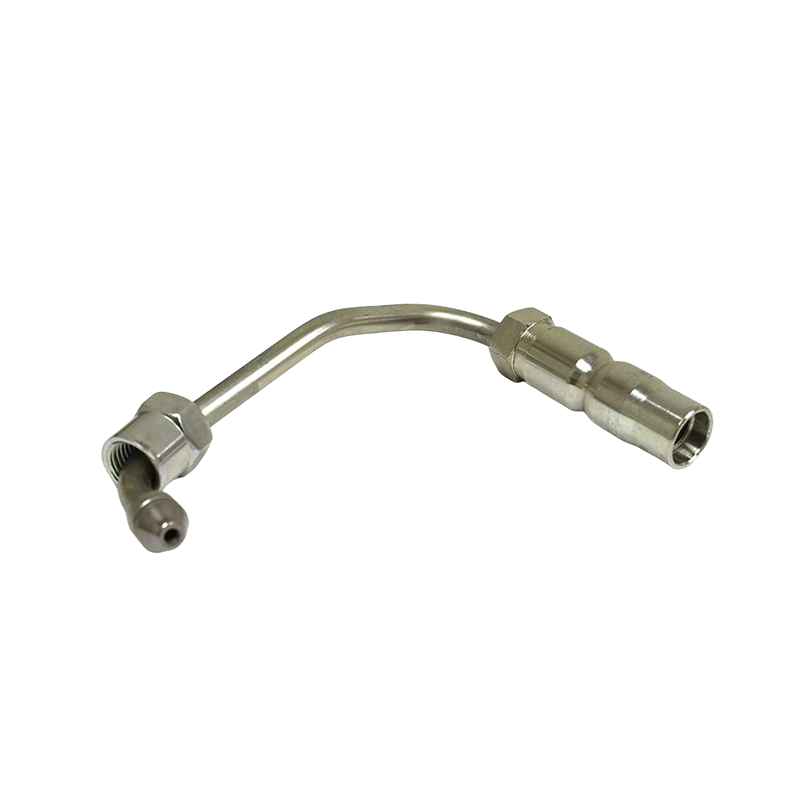
High-quality fuel lines are designed to withstand not only extreme pressures, but also the high-frequency hydraulic pulses generated by the injection cycle. Without the structural integrity that cold-drawn seamless steel provides, a standard pipe would suffer metal fatigue within hours. Modern pipes are designed to maintain leak-free performance under thermal fluctuations ranging from cold starts below zero to engine compartment temperatures above 120°C.
Materials Excellence: Seamless Steel vs. Welded Alternatives
When selecting replacement fuel lines, the manufacturing process is the most important factor. Premium fuel injector lines are manufactured using high carbon seamless steel . Unlike welded pipe, seamless pipe does not have "weak seams," which is where most high-pressure failures occur. The interior surface of these tubes must have a "mirror finish" to prevent turbulent fuel flow, which can interfere with injection timing.
Combat vibration and fatigue
Diesel engines are inherent vibration generators. Fuel lines are susceptible to harmonic resonance, which can cause the metal to become brittle over time. To combat this, high-end injector tubes feature precision engineered curves and specialized damping clamps. These curvatures are achieved using CNC cold bending processes that ensure the wall thickness remains uniform throughout the arc, avoiding "thin spots" prone to bursting.
| Technical property | Seamless high pressure pipe | Standard welded pipe |
|---|---|---|
| Pressure rating | Up to 2,500 bars | Below 800 bars |
| Corrosion resistance | Zinc-Nickel / Chrome-Free Coating | Basic Paint / Untreated |
| Interior wall smoothness | Ra < 0.4 μm (ultra-soft) | Visible seams/rough. |
Common Fuel Line Failure Symptoms
Because fuel lines operate under such high stress, even a minor problem can manifest into major engine problems. Early identification of these symptoms can prevent a complete engine stall or, in extreme cases, a high-pressure fuel fire.
- Difficult start: Microleaks allow air to enter the system, making it take longer for the pump to build enough pressure.
- Visible fuel misting: A "fog" near the injector is a sign of a sharp leak in the pipe wall.
- Rough idle: Variations in the internal diameter of the pipe between the cylinders cause uneven fuel delivery.
- Higher fuel consumption: Inefficient delivery and pressure loss forces the ECU to overcompensate, wasting fuel.
Installation Integrity: The Importance of Bonding Pair
Even the highest quality fuel line will fail if the connection points are compromised. Most fuel injector lines use a conical or spherical sealing surface . They are precision machined to create a metal-to-metal seal that requires no gaskets. However, this requires exact torque specifications during installation.
Overtightening can crush the sealing cone, causing permanent damage to both the pipe and the injector inlet. Conversely, insufficient tightening allows for high-pressure "crying" that can erode the metal surface over time through a process called hydraulic cavitation. Professional technicians always use a calibrated torque wrench to ensure the flare nut is seated within the manufacturer's window (typically 25-35 Nm depending on engine model).
Corrosion protection and longevity
Environmental factors such as road salt and humidity can cause external pitting corrosion. Once a well reaches a critical depth, the internal pressure will cause the pipe to burst. To prevent this, modern fuel lines are treated with zinc-nickel coating or advanced epoxy coatings. These coatings must be flexible enough to resist "breathing" of the pipe as it expands and contracts under pulses of pressure.
For heavy-duty applications, such as marine or mining equipment, many fuel lines now feature a double wall design (jacketed) . Should the inner tube fail, the outer jacket contains the high-pressure spray and directs it to a collection tank, setting off an alarm and preventing a fire. This safety feature is a mandatory requirement for many SOLAS compliant marine engines.
Ultimately, your fuel injector line is the silent guardian of your engine's efficiency. By choosing seamless, high-pressure rated tubing with superior corrosion protection, fleet managers and vehicle owners can ensure maximum uptime and maximum fuel economy .
Our Main Products

 Contact Us
+86-138 0586 3066
+86-574 8840 6311
 Products
 Send An E-mail
 Mobile
Copyright ?NINGBO JIATIAN AUTOMOBILE PIPE CO.,LTD. All Rights Reserved.
 China's Premium Automotive Tube Factory
Custom Automotive Pipe Fittings Supply
China's Premium Automotive Tube Factory
Custom Automotive Pipe Fittings Supply